
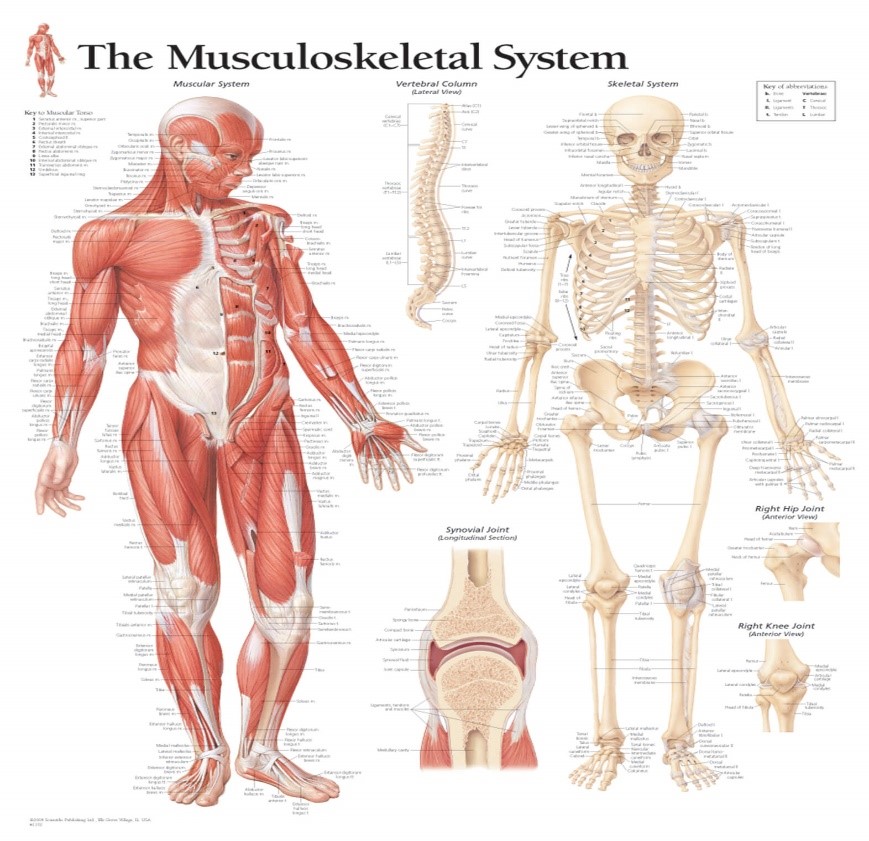
Anyone who has studied anatomy knows the moment. You read about a nerve pathway, memorize its name, maybe even underline it in a textbook. But when someone asks where exactly it runs in the body, the picture in your head feels fuzzy. Not wrong, just incomplete.
That’s the quiet challenge inside medical education. Students are expected to absorb a massive amount of structural detail, yet much of the early learning still happens through reading and lectures. Words help, but they rarely capture the spatial reality of the human body.
This is where medical teaching aids begin to matter. They give learners something solid to look at, compare, and return to again and again. Instead of guessing the layout of muscles or organs, students can actually see how everything fits together.
Anatomy Is Hard to Imagine
Anatomy isn’t difficult only because there is a lot to memorize. It’s difficult because everything connects. Take the shoulder, for example. Several muscles overlap there. Nerves pass through narrow spaces. Blood vessels branch in ways that aren’t obvious from the text alone. Reading about it can feel like assembling a structure blindly.
A clear anatomical chart changes that experience almost immediately. Instead of reconstructing the body from descriptions, learners can examine a visual reference that already shows the correct relationships. The difference sounds small, but in practice, it saves a lot of confusion.
Seeing Structure Changes How Students Learn
When students spend time looking at a human body anatomical chart, something interesting happens. Recognizing patterns becomes more important than memorizing labels.
They begin to see how muscles and bones fit together. How organs fit into certain spaces. How some pathways are the same in different parts of the body.
That familiarity with the picture grows slowly. A quick look during class, a longer look while studying, or maybe comparing it to diagrams in the textbook. Over time, the body stops feeling abstract.
This is exactly why educators rely on medical teaching aids during instruction. Visual repetition helps students build a stable mental map instead of isolated fragments of information.
Memory Works Better with Visual Anchors
Medical training requires strong recall. Students need to remember structures not only during exams but also later when working with real patients. Pure memorization can be fragile. Facts learned without context fade quickly.
An anatomical chart provides a visual anchor. When students review material, they often recall the position of a structure on the chart itself. The image acts as a cue that brings the associated information back.
A detailed human body anatomical chart is especially helpful because it shows multiple systems within the same framework. Instead of studying muscles, nerves, and organs separately, learners begin understanding how they coexist.
That shift from isolated facts to connected systems makes knowledge easier to retain.
Different Students Learn in Different Ways
Walk into any medical classroom, and you’ll notice something quickly. Not everyone studies the same way. Some students prefer reading detailed explanations. Others sketch diagrams in their notebooks. Many rely heavily on visual material to grasp spatial relationships.
Using medical teaching aids allows instructors to support these differences without changing the core lesson. An anatomical chart placed in the classroom becomes a shared reference point. Students glance at it during discussions, double-check a structure, or use it to clarify a question.
For visual learners, those moments are often where real understanding begins.
Teaching Anatomy Becomes Clearer Too
It’s not just students who benefit from visual tools. Teachers do as well. Explaining anatomical relationships verbally can be surprisingly tricky. Imagine describing the branching pattern of arteries without pointing to anything. The explanation becomes long, and students may still picture it incorrectly.
With medical teaching aids, instruction becomes more direct. A teacher can simply indicate a location on an anatomical chart, trace the route of a nerve, or highlight the position of an organ.
The explanation becomes shorter. The idea becomes clearer. Everyone in the room is looking at the same reference.
Building Confidence Before Clinical Training
Eventually, medical students move from the classroom to clinical settings. When that happens, theoretical knowledge has to translate into quick recognition. Visual familiarity helps with that transition.
A student who has repeatedly studied a human body anatomical chart already carries a mental outline of the body. When they encounter medical images, case discussions, or procedural explanations, the structures feel recognizable rather than foreign.
That familiarity reduces hesitation. It also builds confidence, which is important when learning in real clinical environments.
Conclusion
Knowing Anatomy means being able to recognize the structure of the human body, as well as how these structures relate to the systems within the human body. Tools such as anatomical charts or human body anatomical charts allow you to see these relationships more clearly; therefore, they will help you remember the functions of the human body’s anatomical components beings because you see their functions.
When used regularly in classrooms, medical teaching aids help students move from confusion to clarity and build a stronger foundation for medical practice.
Scientific Publishing supports educators and students with carefully designed medical teaching aids, including detailed anatomical charts and human body anatomical chart resources that make anatomy easier to study and teach. Explore our educational materials at Scientific Publishing to strengthen visual learning in modern medical training.
FAQs
- What are medical teaching aids?
Medical teaching aids are educational tools that help students understand complex medical concepts through visual or physical representation. Examples include anatomical charts, models, and diagrams used in classrooms and labs.
- Why are medical teaching aids important in medical training?
They help students visualize anatomical structures and relationships that are difficult to understand through text alone. This improves comprehension and long-term retention.
- What is an anatomical chart?
An anatomical chart is a detailed visual diagram of the human body or a specific body system. It helps students and educators study structures, positions, and connections within the body.
- How does a human body anatomical chart help students learn?
A human body anatomical chart provides a clear visual layout of organs, muscles, and systems. This helps students build a mental map of the body and understand how structures interact.
- Are anatomical charts useful for visual learners?
Yes, visual learners benefit greatly from charts because they can see spatial relationships directly. This makes complex anatomical information easier to grasp.